

A crisis beyond politics


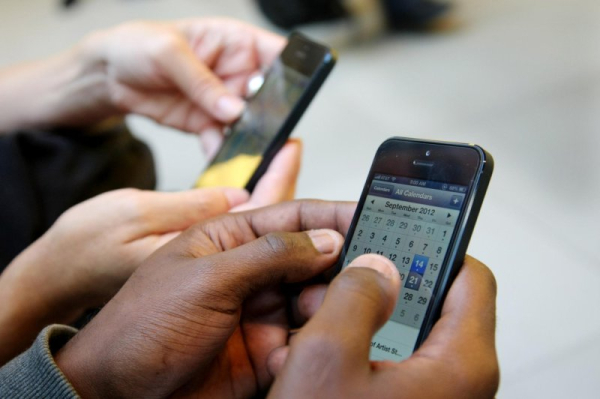
In June 2025, the World Health Organization released a landmark report on social disconnection. Its findings were stark: one in six people worldwide is affected by loneliness, and the condition contributes to an estimated 871,000 deaths each year. File Photo by Monika Graff/UPI | License Photo
In June 2025, the World Health Organization released a landmark report on social disconnection. Its findings were stark: one in six people worldwide is affected by loneliness, and the condition contributes to an estimated 871,000 deaths each year.
The report also identified digital technology as a driver of the crisis, warning about excessive screen time and harmful online interactions, especially among young people. That finding deserves more than a public health response. It also calls for moral and philosophical reflection.
Hannah Arendt warned of the “banality of evil:” the danger that arises when ordinary people stop thinking for themselves. Under the pressure of ideology or indifference, they lose the habit of moral judgment and become complicit in wrongdoing without fully confronting what they are doing.
Dietrich Bonhoeffer saw a related danger: that stupidity can be more dangerous than evil because it paralyzes ethical reflection and leaves reason powerless.
Both thinkers were describing tendencies that now appear in new form in digital life.
The WHO report is not just a health document. It reflects a deeper problem: a growing crisis of the person in digital society. Around the world, the international order is under strain, human rights are often violated with impunity, and moral language can sound increasingly hollow. Yet today’s crisis is not only political. It is also a moral crisis that reaches into the religious and personal dimensions of life, and to understand it fully, we must ask what digital society is doing to human beings from the inside.
When agency weakens
As technology mediates more of daily life, many people surrender part of their agency to systems they neither control nor fully understand.
Algorithms shape what they see, what they fear and what they believe matters. The problem is not only that technology is powerful. It is that people gradually lose the habit of inward judgment. They react more quickly, but reflect less deeply.
This shift affects public life, but it also reaches the inner life. People now live under constant external pressure: social expectations, workplace demands and the relentless gaze of others, amplified through screens.
What was once occasional has become continuous. According to the WHO report, lonely people are twice as likely to experience depression, while social disconnection raises the risk of stroke, heart disease and cognitive decline.
These figures are not merely medical indicators. They suggest lives lived under sustained strain, without enough interior rest and without the depth of human connection that gives stability and meaning.
That creates a growing tension between the self and the outside world. On one side is the effort to remain inwardly grounded and faithful to one’s convictions. On the other hand, there is the pressure to perform, adapt and remain visible. When that tension can no longer be processed inwardly or expressed clearly in words, the body often absorbs what the mind cannot resolve.
In that sense, symptoms such as burnout, insomnia and chronic fatigue are not always isolated personal problems. In many cases, they also reflect lives lived under prolonged pressure. The body does not simply malfunction. It can also register distress that a person has not fully been able to name.
The exhaustion society
This is especially visible in what philosopher Byung-Chul Han has called the “achievement society.” People are no longer controlled mainly by direct external authority. Instead, they internalize pressure and drive themselves in the name of success and visibility. The individual becomes both master and servant, pushing forward while quietly wearing themself down.
The result is not greater freedom, but a new form of exhaustion.
The digital environment intensifies this condition. Social media encourages endless comparison. Public discourse rewards reaction more than thought. Relationships become thinner and more instrumental. People are connected all the time, yet many feel unseen. They are surrounded by signals and demands, yet inwardly displaced from themselves.
The WHO report captures this paradox clearly: we live in the most connected age in history, yet loneliness remains widespread, especially among the young. Among adolescents and young adults, loneliness rates range from 17% to 21% globally. That helps explain why so much suffering today feels diffuse. Many people are not only tired but disoriented, not only anxious but estranged from deeper sources of meaning.
When the abnormal becomes normal
A further danger follows. Societies gradually adapt to what should never have become acceptable. Corruption becomes routine. Violence becomes background noise. Institutional decay is treated as inevitable, and public dishonesty is excused as realism. Capable people begin to minimize what, at another time, they would have clearly condemned.
This is a form of sociocultural normosis: the normalization of dysfunction until the disease is already widespread. Something similar happens with moral language. Good words continue to circulate, but with less force. Public figures speak of democracy, dignity and peace, yet their conduct often empties those words of meaning.
That is what I would call the banality of good: not goodness itself, but the passive repetition of moral formulas without courage or coherence. Evil advances not only because bad actors act, but because too many decent people retreat into caution, convenience or silence.
Recovering the human center
If this diagnosis is even partly correct, the response cannot be merely technical. It must also be moral and cultural.
The WHO report calls on governments to treat social connection as a public health priority, alongside physical and mental health. That is necessary. But policy alone cannot restore the inner conditions that make connection meaningful. We also need people who can think clearly, make independent judgments and resist manipulation. We need digital tools, but not at the cost of human agency.
The deeper question is whether balance is still recoverable: between material progress and inner life, between productivity and meaning, between the self and the demands of the world. What the WHO data makes clear is that the cost of imbalance is not abstract. It appears in illness, in isolation and in early death.
That recognition is a starting point. When society loses its moral center, the damage does not remain in politics alone. It enters relationships. It enters consciousness. And sooner or later, it enters the body.
Carlos Cantero is a Chilean academic at the International University of La Rioja in Spain and the author of Digital Society: Reason and Emotion. An international lecturer, adviser, and consultant, he focuses on adaptability in digital society, ethics, social innovation, and human development. The views and opinions expressed in this commentary are solely those of the author.
